Skill Building in Early Childhood Education (ECE) in India
- Vinod Kakumanu
- Feb. 16, 2026, 9:07 a.m.
Skill Development in ECE lays the groundwork for holistic growth and lifelong education in India. Children build the required social, emotional, problem-solving and communication skills through play-based learning methods during their early years. Preschool instructors play an essential part as facilitators by planning age-relevant activities and fostering engaging learning ecosystems. Children are active learners who develop through interaction, self-expression and exploration. ECE becomes a mighty platform for establishing capable and confident learners when supportive families, curious children and skilled educators work together.
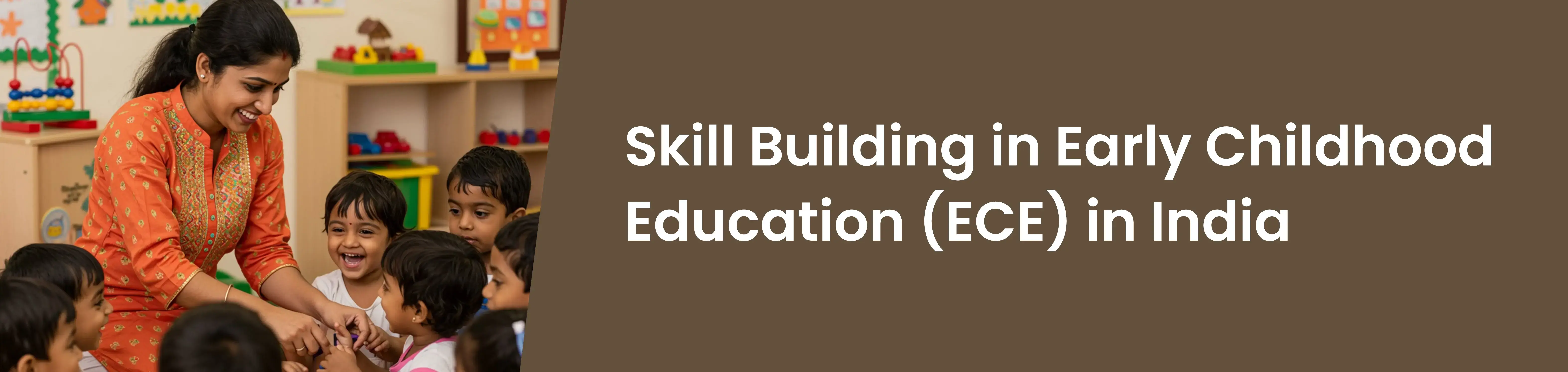
The early years build the foundation of a child’s lifelong educational journey. Children gain the required skills that shape how they communicate, understand the world around them and think during this important stage of growth. ECE is about building enriching experiences that foster confidence and curiosity for learning from the early stages of their life.
The preschool teacher plays an essential role as a facilitator of skill development, and effective skill development depends on the teacher's expertise. The child’s role as an active learner is equally crucial. Children are not only recipients of knowledge, but they also learn best by questioning, exploring, and experimenting with adults.
The article examines the interrelated roles of children and preschool teachers in ECE skill development.
Preschool Teachers’ Role in Skill Building: Facilitator
Based on children's individual interests, preschool instructors plan educational games, lessons, and other activities that engage them, build their love of learning, and support their growth. Preschool instructors make sure that the early learning standards are applied to the classroom program. Here are some examples of preschool instructors who should assist their children in building age-relevant skills.
1. Reading
-
- Helping children in learning the alphabet.
- Offering engaging materials that show writing examples.
- Reading books with fun language, playing rhyming games and singing songs.
- Labelling classroom materials to support children in linking spoken language with words.
2. Language
-
- Bringing in new vocabulary.
- Asking questions that need an answer to stretch your children’s spoken language use.
- Promoting children and reading stories to make up their own story.
- Planning collaborative games that require interaction.
3. Thinking
-
- Ask children the questions that will broaden their thinking.
- Offer choices to discover engaging things.
- Suggest some ways for children to make their playtime and thinking more difficult.
4. Math
-
- Offering engaging objects for children to sort and count.
- Comment on the numbers that exist in a child’s day.
- Promote children to measure and compare various objects.
5. Writing
-
- Assisting children in spelling the names and writing letters of the alphabet
- Promoting children’s writing by offering a fun classification of writing tools and paper.
- Providing children with various types of writing tools such as pencils, markers and crayons.
- Recommending that children write as a part of their everyday functions.
- Instructing children to spell words that they come across in the classroom.
Skills Preschool Teachers Require to Assist Children: Competencies
1. Creativity
Better Montessori and ECE instructors build a positive ecosystem for children to explore and be creative. They can plan functions where children can convey their creativity and learn much about the globe around them.
2. Adaptability
As you plan your classroom activities and lessons, unexpected situations may step in. Whether forgetting an essential supply for a craft or a thunderstorm forcing the children to stay away from the outdoor play area, you should stay adaptable. This involves having the adaptability skills to alter some classroom functions to involve children with various learning styles or abilities.
For instance, not every child can understand when you are teaching the alphabet from the whiteboard. Some children study better by drawing letters in a sandbox or writing on paper. When the day doesn’t go as planned, this will assist you handle the classroom.
3. Emotional Brilliance
Emotional brilliance or intelligence is your capability to understand, manage, recognize and employ emotions towards others and yourself. It is developed on these four skills given below.
-
- Self-regulation is how you treat your emotions and adjust to altering situations. Influencing your own emotions assists you in dealing with modifying situations in children’s behaviour and in the classroom.
- Self-awareness is staying alert to your emotions and how they influence your actions and behaviours. Staying self-aware of your emotions lets you act calmly and responsibly, a behaviour that young children will learn to cope with in life.
- Social Skills assist with maintenance and relationship building, developing strong leadership and communication skills. Posing better social skills demonstrate children how to maintain friendships and interact better even in the face of disagreements. Better interaction with caregivers and parents helps them feel involved in their child’s care and education.
- Empathy is recognising and understanding the emotions of others and being able to provide support and comfort. Staying empathetic towards your children helps develop a belief in you as a trusted figure in their lives.
Help your children build these skills and positive emotional brilliance by providing guidance and empathetic support as they navigate their day with your attention.
4. Observation and assessment abilities
Parents will anticipate assessments and development reports of their children from you. So, you must have better observation skills and assess children against any standards. This means staying alert to general growth milestones and promoting their growth as well. Your observation ability will let you find potential concerns earlier, so you can adjust your activities and teaching style to promote development and fill in enhancement gaps in your children. Your assessment skills will assist you in watching and planning the next steps for each child to move forward with your support.
5. Organisation and classroom management skills
An early learning classroom or a preschooler can be a little confusing at times. Reduce the confusion and engrain politeness with your organisation and management skills. Classroom management will assist you in building a structured space where children feel free and safe to discover and learn without many constraints.
Balancing flexibility and routines to meet your children’s requirements and adjust when required to avoid unnecessary confusion. Organisation skills will assist you in maintaining class schedules, coordinating classrooms and tidiness to make sure children's learning requirements are satisfied.
6. Dedication to lifelong learning
It takes 12 to 52 weeks to become a professional Montessori or ECE teacher in India. The early learning and understanding of the world are adapting as scientists disclose knowledge on preschool education. You should be dedicated to learning new things and upgrading your regular skills as a Montessori or ECE instructor. This is the better method to serve the children in your care. Stay open to professional growth opportunities, feedbacks and build a positive early learning ecosystem in your classroom.
7. Cultural inclusiveness and sensitivity
Educators should practice cultural sensitivity and build an inclusive classroom, and this may make allowances for children with particular requirements that need to be satisfied. Take chances to assist children in respecting their diversity and knowing about everyone’s cultures.
Exploring observances in a classroom and exploring cultures can be employed as a learning tool for children to know more about their peers and the life beyond their classroom. Stay culturally inclusive and sensitive, building a classroom where all children feel heard, seen and not afraid to depict what makes them special.
Preschool Children’s Role in Skill Building: Active Learner
Throughout a child’s initial 5 years, their brains grow faster than at any other period in their life. Parenting at-home with the professional help of a preschool instructor and offering your child social communications with preschool classmates is such a priceless investment in your child’s future.
Preschool offers your child the chance to deepen and widen the required skills that will prepare them for a life of learning and strengthen them to make positive contributions to the globe around them. Below are some essential skills your child should build in preschool.
1. Literacy Development
Children can start to learn to write their names and read easy words by the age of 3. The practice they get in preschool prepares them for success in literacy growth in elementary school and kindergarten.
2. Social Skills
Preschool children learn how to get along with others and respect by learning beside each other and through collaborative play, which promotes overall social skills, self-control and their language skills. Teachers help children by resolving struggles that may increase during structured learning procedures or creative play.
3. Emotional Development
To understand your child’s feelings and preschool experience, you should contribute to assisting them, and this involves handling those feelings and their related behaviours.
4. Communication Skills
Your child’s ability to convey their requirements, express their feelings, and ask questions, through body language and spoken words are of extreme necessity to their ability to succeed academically and socially. Their teachers' feedback and preschool functions are planned to perfect all interaction skills.
5. Listening Skills
To understand what is being taught and to follow the directions, a child’s listening skills are essential to their overall academic and social learning. Hence, preschool ecosystems encourage functions that develop your child’s listening skills.
6. Attention Spam
We can understand how hard it is for young learners to sit and pay attention for more than a few minutes. The fostering eco-system of a pre-school is key for children to grow their attention spans in preparation for the more challenging learning eco-systems ahead.
7. Fine Motor Skills
Early learning stage design activities that need children to sculpt objects, employ markers, and other creative play build children's motor skills, which will be important for very difficult projects that they will come across in their lives in the future.
8. Problem-Solving Skills
Every part of life demands problem-solving, and this skill growth should start in preschool with personal relationships, a foundation for school success and even simple activities in life. Instructing children’s problem-solving skills can happen through personal assignments, games and interactions.
9. Creativity
Children build confidence in themselves and can face problems from new perspectives when a child is promoted to self-expression through creativity. All these activities assist them to build their individual self-sense and become adults in children’s lives to honour each child’s speciality.
10. Math Skills
Learning to start counting things and remember numbers during preschool helps children to comprehend how maths is used in the world. This offers the basis for each subsequent year's difficult maths curriculum.
Final Thought
Skill development in ECE is a continuous and collaborative process that lays the foundation for a child’s overall development and future learning in India. The early years are not a preparation stage for formal education, and there are a few powerful periods where social, emotional, cognitive, creative and physical skills start to take shape through guided exploration and meaningful experiences.
Instructors build nurturing ecosystems where every child feels encouraged and safe to learn. Their ability to observe and assess individual requirements assures that skill building is aligned and inclusive with each child’s special learning abilities. Simultaneously, children are active participants in their growth, and when they are empowered to engage and explore, learning becomes meaningful and joyful.
Finally, efficient skill development in ECE comes from the firm partnership between supportive families, engaged young learners and skilled educators. Through nurturing and responsive preschool ecosystems, we invest in compassionate, capable and confident individuals who are prepared for positive contributions and lifelong learning around the globe.


Write to our School Consultant: