Social-Emotional Learning Model Supporting Early Childhood Education
- Vinod Kakumanu
- Feb. 6, 2026, 3:44 p.m.
The SEL model is merged with ECE across the school community, growing skills like self-regulation, relationship building, decision-making, social and self-awareness, using parent participation and open interactions. SEL creates inclusive environments and resilient individuals, promoting learning and positive social behaviour.
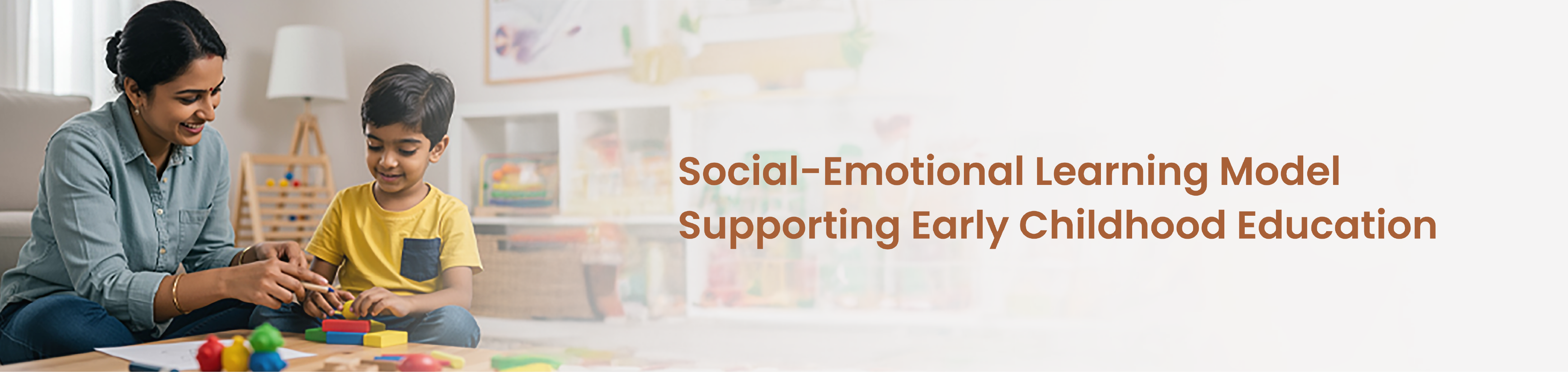
Early Childhood Education (ECE) is more distinguished as the foundation for academic preparedness, lifelong emotional and social development. Researchers and educators have emphasised Social-Emotional Learning (SEL) as a major support tool for superior-level ECE. SEL strengthens education by nurturing emotional brilliance and healthy relationships. It also helps children build skills to associate with others, understand emotions, create foundations, and navigate social issues.
What does Social Emotional Learning mean?
SEL is an organised model that supports the growth of necessary life skills in children associated with feelings, thoughts, behaviour and social interaction. SEL is all about assisting children at its core:
-
- Develop care and empathy for others
- Recognise and handle their emotions
- Make responsible determinations
- Form supportive and healthy relationships
- Express resilience during problems
UNESCO places SEL as an inherent part of learning that contributes to positive societal outcomes like peace, sustainable development, and increases students’ well-being. SEL can be seen as a way of learning to act brilliantly in the world while ensuring a sense of belonging in early childhood. It is woven across interactions, play and daily activities, rather than a set of isolated lessons.
SEL Counts in Early Childhood
From birth up to 8 years of age, this is the vital time for the brain’s growth in the early years of a child’s life. During this period, the stress responses, emotional regulations, behavioural skills and social bonds are determined. SEL supports this growth level by fostering resilience and emotional health, as well as cognitive skills. Children need the tools to carry emotions, approach issues with confidence, and form significant relationships that support personal life success and academic learning.
SEL Framework for Early Childhood
A SEL framework in ECE typically involves the following interconnected domains:
1. Decision-Making:
SEL helps children to act ethically, consider consequences, reflect on their trajectory impact, and emotional competencies, considering it as substantial as academic skills. These things also help young children make everyday choices.
2. Relationship Skills:
Children should know how to make positive relationships by active listening, respectful communication and cooperative play. These skills assist in training children for the social ecosystem in life and school in the future
3. Self and Social Awareness:
Children realise their emotional levels, which influence learning and behaviour, from an early age of self-awareness. This determines the basis for self-confidence, interaction and empathy. Group activities, play-based communications and storytelling can improve children’s ability to navigate social contexts.
4. Self-Management:
Young children can control impulses, handle frustration, work towards their goals and endure routines with the ability to determine human behaviours and emotions. These skills are connected with achievements in academic tasks and collaborative activities.
Early Childhood Setting: Implementation
1 .Contextual and Community Integration
Programs that associate children with communities, natural environments and families reinforce social responsibility. For instance, inter-generational projects and community art initiatives have depicted how children can study with vast groups, nurturing social connections.
These experiences assist children in understanding real-world diversity, civic engagement and relationships, extending their sense of belonging beyond schools.
2. Play: A Vehicle for SEL
Play is foundational to emotional growth, and education where children negotiate conflicts, discover social roles, practice cooperation and interpret emotions. This natural approach complements planned activities and deepens SEL outcomes.
SEL in Early Years: Advantages
Global evidence and research show SEL enhances a range of results, such as:
1. Emotional Happiness
Children learn to deal with uncertainty, recover from problems and handle stress.
2. Academic Engagement
SEL supports better motivation and classroom participation.
3. Long-Term Success
SEL contributes to life-time skills like ethical decision-making, teamwork and resilience.
4. Pro-Social Act
Cooperation and increased empathy encourage harmonious interactions and cut down conflict.
UNESCO observes that better-planned SEL approaches can afford a strong ROI, enhancing academic results, emotional skills and social behaviours throughout various circumstances.
Final Thought
SEL is important for ECE because it fosters empathy, emotion, relationships and self-regulation. Policymakers and educators support social intelligence, ethical participation in community life and lifelong emotional resilience by integrating SEL into early learning models. Apart from children’s academic abilities, the SEL framework stands as a transformative approach that realises whole-child growth, preparing young children for successful relationships and the diverse world they live in.


Write to our School Consultant: